
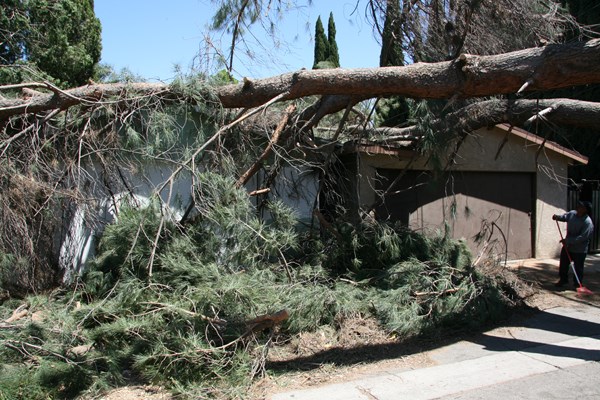
Tree roots give stability and allow uptake of nutrients, water, and oxygen. Protecting tree roots during construction is imperative to the survival of a tree. Tree roots are damaged by cutting, soil compaction, and changing soil depth. Root cutting occurs when trenching for utilities or other digging is needed during construction. One of the causes of tree failure is root cutting. When a tree’s root system has been extensively damaged, the whole tree can fall to the ground, sometimes onto houses or cars. These catastrophic events may be avoidable.
Soil compaction takes place when construction vehicles drive over the root system. Changing soil depth damages roots by either exposing the roots through a decrease in soil depth or by smothering the roots through an increase in soil depth. Many times when roots are damaged, it takes years before this damage is evident by the decline or death of the tree.
Protecting trees during construction is another way trees are damaged. The trees roots inside the tree’s canopy is the area of concern to avoiding root damage. This area inside the canopy is called the Critical Root Zone (CRZ). The CRZ is a circular area around the stem of the tree, usually smaller than the area defined by the outer reaches of the tree’s branches, known as the drip line.
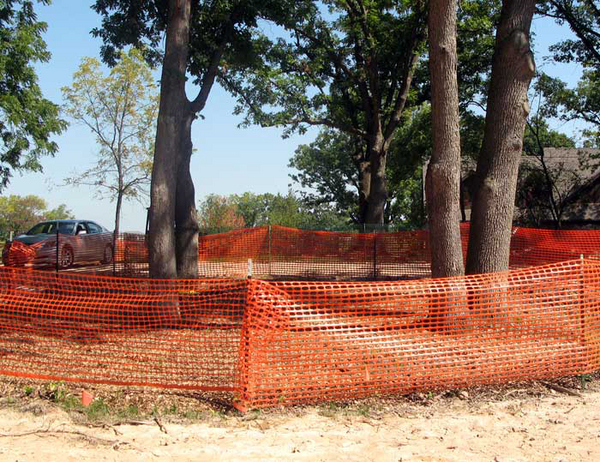
New landscaping can also cause damage to a root system. Avoiding root damage requires planning to allow construction to take place smoothly with minimal damage to the tree. This includes erecting barriers around the tree and limiting access. If trenching is required for utilities, tunneling under the root system is a better option than trenching across the roots because most of the root system is located between 6 to 24 inches below the ground’s surface. While these are general guidelines, a consulting arborist will help with the preservation and planning process as well as after the construction is complete.

The Morton Arboretum states that over 80% of all landscape problems originate underground. With this in mind, it is safe to say that root problems become tree problems, including limb and tree failure. Trees are stressed due to improper watering which can lead to disease and insect susceptibility. Fungi attack tree roots. When large perennial roots are attacked, growth is suppressed, structural support and food storage is reduced, and food-transporting cells decay. When feeder roots are attacked the nutrient- and water-absorbing capability is reduced. Symptoms of dead roots and the reduction of water and nutrient uptake appear in the tree canopy as unhealthy foliage – such as yellowing, scorching, and dieback. Fungal growth may appear at the base of the tree as well as under the bark. Insects attack in three ways – chewing, sucking, or boring. Chewing and sucking insects affect leaves, and this reduces food production; boring insects disrupt the transfer of water and nutrients.
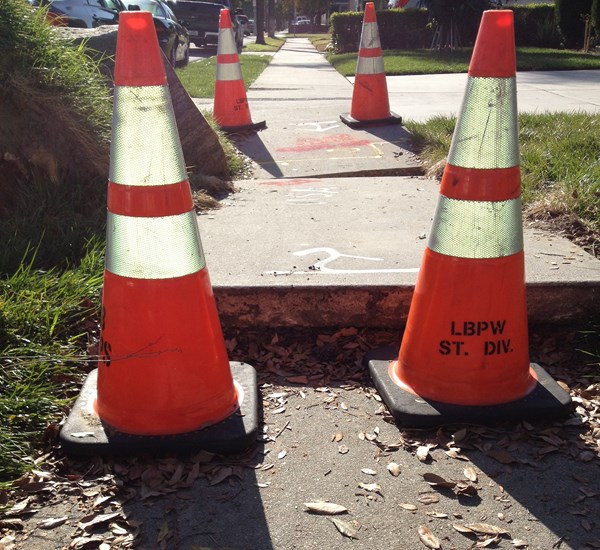
Many times owners cut roots that grow under sidewalks, walls, and driveways. However, this may not be the best solution. There are a few ways to fix the problem while keeping from damaging the roots, which will happen if roots are cut. Bridging is one such method of fixing the damaged sidewalk or driveway. Another option is using alternative surfaces to concrete or rerouting the concrete walkway.
Before planning your next construction around and near trees or cutting tree roots, contact a consulting arborist who has the experience, knowledge, and background working with tree roots.
Proudly serving Los Angeles, Orange County, and San Diego, Evergreen Arborist provides a wide range of tree consulting, tree care, and landscape consulting services throughout California. Contact us today!